HomilyKrijtberg
Christ the King
Automatic translation, independently checked · Christus Koning
Date as given in the church’s file name.
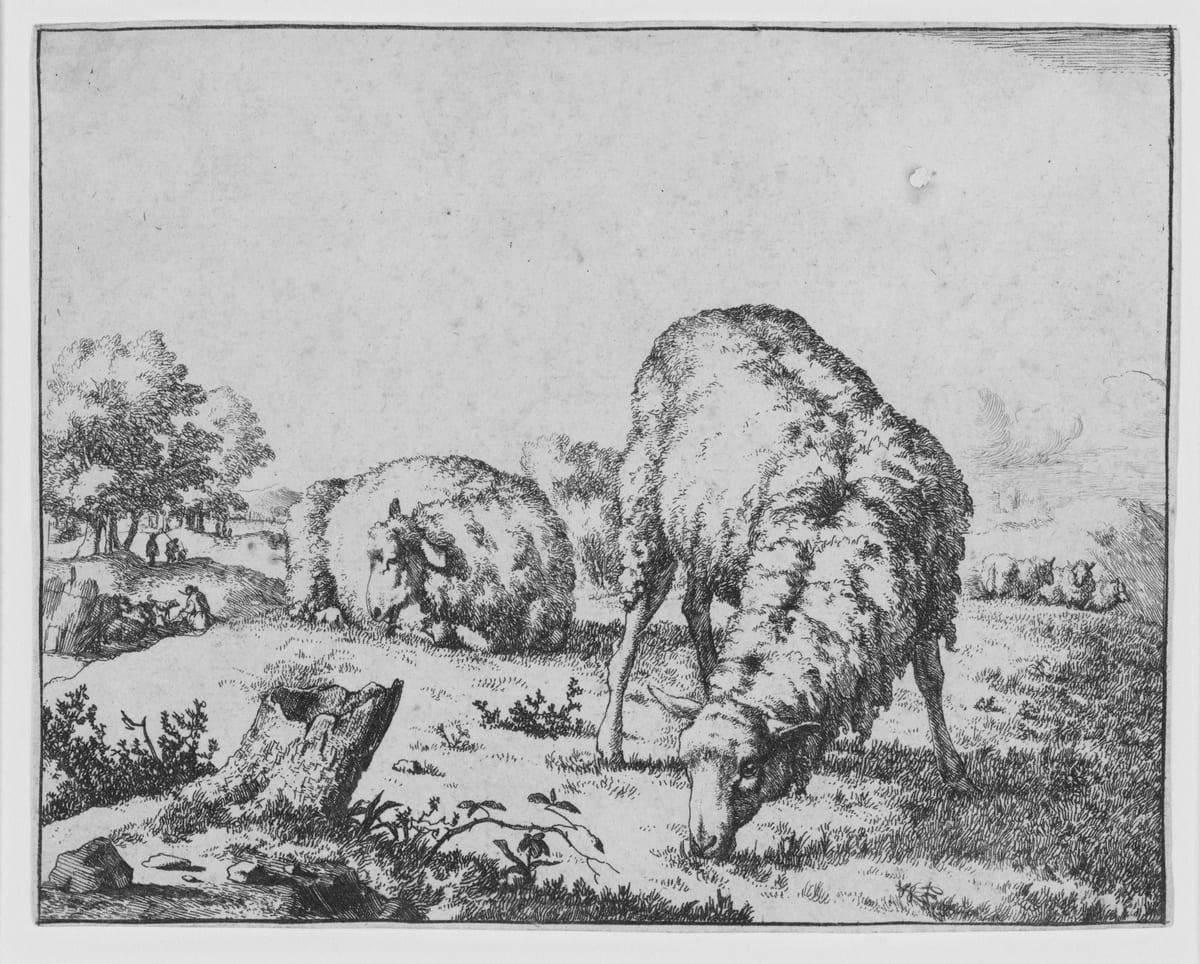
Brothers and sisters, humanly speaking, the contrast could not be greater: we celebrate the great feast of Christ, King of the universe, and the Gospel reminds us of the crucifixion of Jesus, who is ridiculed and mocked. Above his head hangs a sign: Iesus Nazarenus, Rex Iudaeorum, that is, Jesus of Nazareth, King of the Jews. How do we come to celebrate this feast and to acknowledge both his earthly and his heavenly kingship?
For that we must first go back to the first reading, to King David. This King David, so strikingly depicted in Michelangelo's sculpture, was king of Israel around the year 1000 before Christ. He is anointed king for three reasons: He belongs to their own people. That is one. They know and appreciate his qualities of leadership. That is two. For when King Saul still reigned, David was the one who won victories. But as the most important reason, the second book of Samuel states: God himself has appointed him king. Already at a young age David is anointed by the prophet Samuel in Bethlehem. This is described in a beautiful passage in the first book of Samuel. The prophet comes to visit Jisjai, or Jesse, who presents all his sons to him. All but one, the youngest, who is tending sheep. Then Samuel said to Jesse: 'Send and fetch him, for we will not sit down until he arrives.' The boy comes and the Lord speaks: 'Rise and anoint him, for this is the one.' And from that moment the spirit of the Lord takes possession of David. God chooses the humble shepherd boy to become king.
Between Jesus and David, then, lies roughly 1000 years, but Jesus is called Son of David, because Joseph, the husband of Mary, was a distant descendant of King David. Several Church Fathers have said that Mary too was a descendant of David.
With Christ the King we celebrate the kingship of Jesus, the Messiah, the Anointed One. How different his kingship is from that of David and of all other kings! He must undergo the ultimate humiliation and great suffering through his crucifixion. Precisely then, when He hangs on the cross, a dispute arises about his kingship. 'He saved others, let Him save Himself if He is the Messiah.' It is none other than one of the other two condemned men, whom we know as 'the good thief', who acknowledges Jesus' kingship. 'Jesus, remember me when You come into Your kingdom.' And as Jesus also did during his earthly life, He granted the requests of simple people, of the sick, and of people who had to live with a physical disability. So He does again now, shortly before his death: He grants the request of the thief who fears the Lord. 'Truly, I say to you: today you will be with Me in paradise.'
Dear people, the kingship of Jesus is of an entirely different nature from that of all other kings and queens. He is the Alpha and the Omega, the beginning and the end, the king of the universe. He is the One who can lead us to paradise.
The signs of his Kingship are already visible now: Christ is the head of the Church. He gathers people together, as we are gathered here on a cold November day. He gathers great crowds, as at the World Youth Days, or online, for example the 18.6 million people who follow Pope Leo on X. We celebrate on the feast of Christ the King that Jesus is the first to have risen from the dead, so that in all things he may be preeminent. Thanks to him we too can live in the light and share in the inheritance of the saints. In Him all things in heaven and on earth are reconciled, and we can live in peace. Amen.
Original text · Dutch
Christus Koning
Broeders en zusters, menselijk gezien kan het contrast niet groter: we vieren het hoogfeest van Christus, Koning van het heelal en het Evangelie herinnert ons aan de kruisiging van Jezus, die wordt uitgelachen en bespot. Boven zijn hoofd hangt een bordje: Iesus Nazarenus, Rex Iudaeorum, ofwel Jezus van Nazareth, koning der joden. Hoe komen we ertoe dit feest te vieren en zowel zijn aardse als zijn hemelse koningschap te erkennen?
Daarvoor moeten we allereerst terug naar de eerste lezing, naar koning David. Deze koning David, zo treffend uitgebeeld in het beeldhouwwerk van Michelangelo, was koning van Israël rond het jaar 1000 voor Christus. Hij wordt tot koning gezalfd, om drie redenen: Hij behoort tot hun eigen volk. Dat is één. Ze kennen en waarderen zijn leiderskwaliteiten. Dat is twee. Want toen koning Saul nog regeerde, was David degene die overwinningen behaalde. Maar als belangrijkste reden wordt in het tweede boek Samuël genoemd: God zelf heeft hem als koning aangewezen. Al op jonge leeftijd wordt David door de profeet Samuël gezalfd in Bethlehem. Dit wordt beschreven in een mooie passage in het eerste boek Samuël. De profeet komt bij Jisjai, ofwel Jesse op bezoek, die hem al zijn zonen voorstelt. Op een na, de jongste, die is schapen aan het hoeden. Daarop zei Samuël tot Jesse: ‘Laat hem dan halen, want we gaan niet aan tafel, voordat hij hier is.’ De jongen komt en de Heer spreekt: ‘Sta op, hem moet gij zalven, hij is het.’ En vanaf dat moment maakt de geest van de Heer zich van David meester. God kiest de eenvoudige herdersjongen uit om koning te worden.
Tussen Jezus en David zit dus ongeveer 1000 jaar, maar Jezus wordt Zoon van David genoemd, omdat Jozef, de man van Maria, een verre nazaat van koning David was. Verschillende kerkvaders hebben gezegd dat ook Maria een nazaat van David was.
Met Christus Koning vieren wij het koningschap van Jezus, de Messias, de Gezalfde. Hoe anders is zijn koningschap dan dat van David en van alle andere koningen! Hij moet de ultieme vernedering en groot lijden ondergaan door zijn kruisiging. Juist dan, wanneer Hij aan het kruis hangt, ontstaat er een twistgesprek over zijn koningschap. ‘Anderen heeft Hij gered, laat Hem nu zichzelf redden als Hij de Messias is.’ Het is nota bene één van de andere twee ter dood veroordeelden, die wij kennen als ‘de goede moordenaar’, die Jezus’ koningschap erkent. ‘Jezus, denk aan mij wanneer Gij in uw koninkrijk zijt gekomen.’ En zoals Jezus ook deed tijdens zijn aardse leven, hij verhoorde de wensen van eenvoudige mensen, van zieken en van mensen die met een lichamelijke beperking moesten leven. Zo doet Hij ook nu, vlak voor zijn dood: Hij verhoort de wens van de moordenaar die de Heer vreest. ‘Voorwaar, Ik zeg u: vandaag nog zult gij met Mij zijn in het paradijs.’
Beste mensen, het koningschap van Jezus is van een geheel andere aard dan dat van alle andere koningen en koninginnen. Hij is de Alpha en de Omega, het begin en het einde, de koning van het heelal. Hij is Degene die ons kan leiden naar het paradijs.
De tekenen van zijn Koningschap zijn nu al zichtbaar: Christus is het hoofd van de Kerk. Hij brengt mensen bijeen, zoals wij hier samen zijn op een koude novemberdag. Hij brengt grote menigten bijeen, zoals bij de Wereldjongerendagen, of online, bijvoorbeeld de 18,6 miljoen mensen die Paus Leo volgen op X. We vieren op het feest van Christus Koning dat Jezus de eerste is die uit de dood is opgestaan, om in alles de hoogste te zijn. Dankzij hem kunnen ook wij leven in het licht en delen in de erfenis van de heiligen. In Hem zijn alle dingen in de hemel en de aarde verzoend en kunnen wij leven in vrede. Amen.
Open the PDF · p. 1 ↗From: homily sheet · 23 November 2025
Full text, reproduced with the parish’s permission. (PDF, 2 pages)